How to Choose a Floor Sweeper for Your Facility
Four things decide which commercial floor sweeper fits your building: how much floor you cover, what kind of debris lands on it, how much airborne dust you can tolerate, and whether the machine has to go where a cord cannot follow.
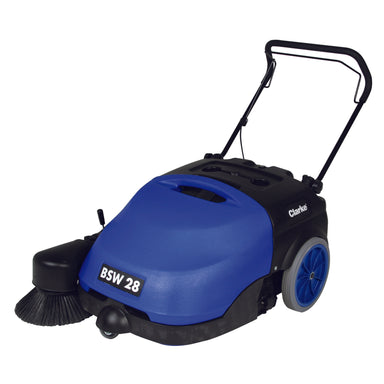
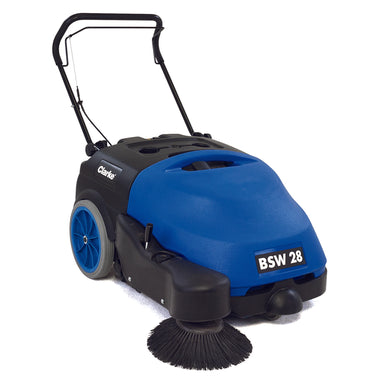
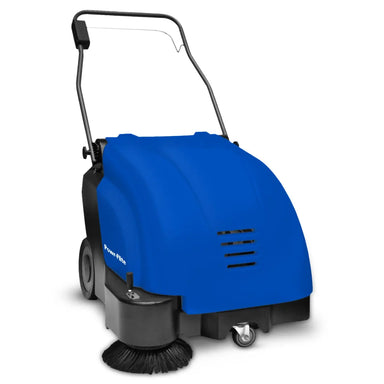
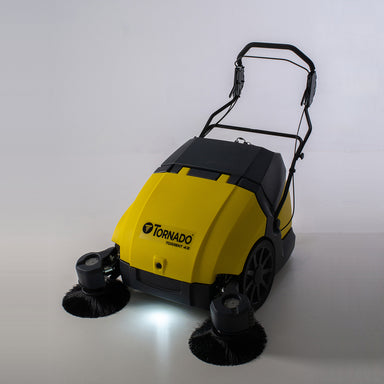
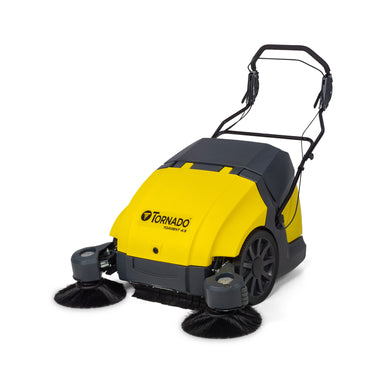
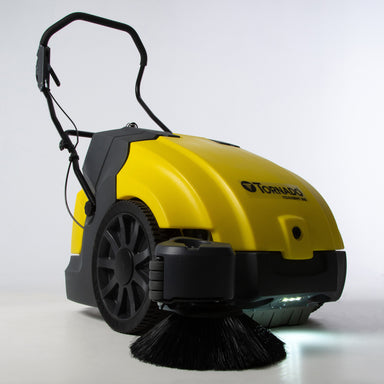
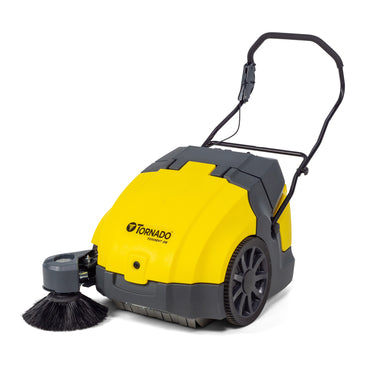
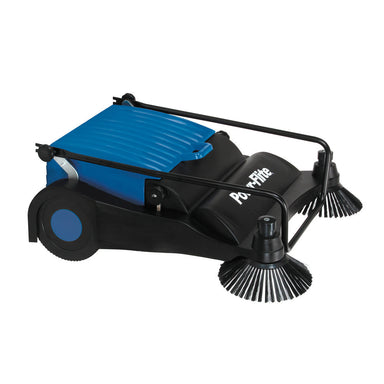
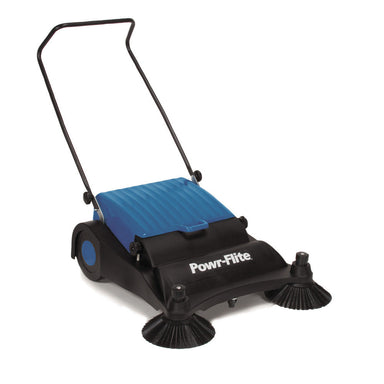
Start with sweep path and square footage. A 32 inch manual push sweeper clears a loading bay or a small shop in minutes and costs less than a set of scrubber batteries. Once you are sweeping daily, or covering more than a few thousand square feet, the walking becomes the cost and a battery machine pays for itself in labor rather than in cleaning quality. Our walk-behind sweep paths run 26, 28, 36 and 43 inches, so match the width to your narrowest aisle first and your total area second.
Then look at what you are picking up. Light dust and paper waste suit a wide area vacuum sweeper, which pulls debris into a filtered hopper and leaves very little airborne. Pallet chips, banding, shrink wrap, bolts and gravel need an industrial floor sweeper with a mechanical broom and a hopper you can dump without bending. If your floor collects both, a vacuum sweeper with a brush assist handles the mix better than either extreme. Horse barns are a classic mixed case, with hay and shavings on the floor and fine dust in the air. Our guide to choosing a horse barn vacuum pairs a litter vacuum with a filtered sweeper.
Dust control matters more than most buyers expect. Sweeping without filtration moves fine particulate into the air instead of into the hopper, which is a problem in food handling, pharmaceutical and electronics facilities, and an irritant everywhere else. Check the filter type and whether the machine offers a filter shaker before you compare prices.
| Format | Best for | Typical sweep path | Starting price |
|---|
| Manual push | Small shops, loading bays, back-up machine for a larger site | 32 in | From $295 |
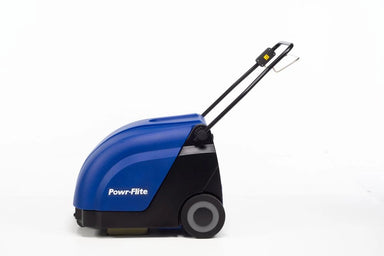
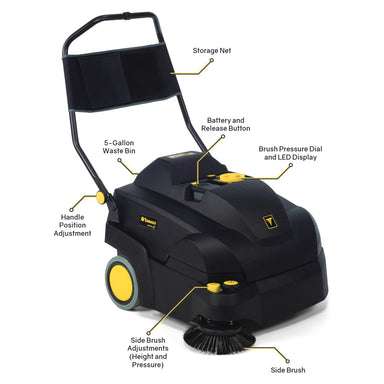
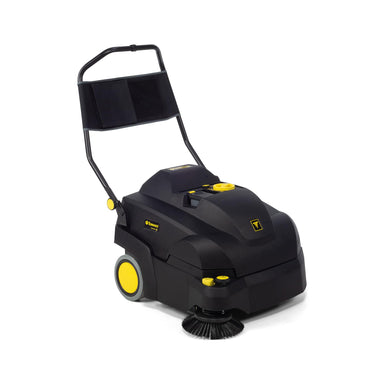
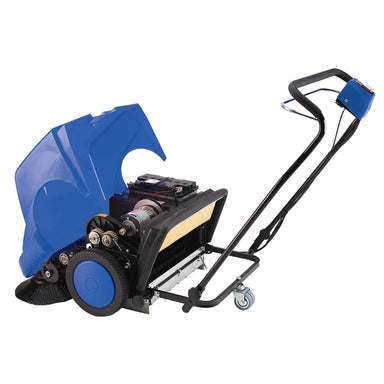
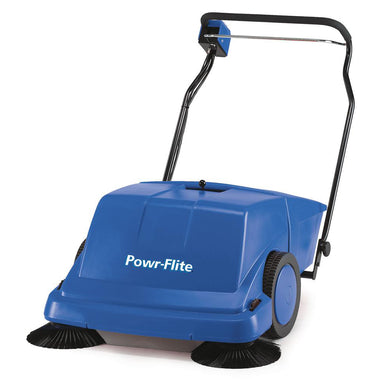
| Battery walk-behind | Warehouses, factory floors, schools, retail back of house | 26 to 43 in | From $2,799 |
| Ride-on | Large open slabs where one operator covers the whole building | 44 in | From $21,528 |
Sweeper or Scrubber?
A sweeper collects dry debris into a hopper. A scrubber lays down solution, agitates the floor and vacuums the dirty water back up. They are not alternatives, they are two steps of the same job, and most facilities need both.
If you only buy one, buy for the soil you actually have. Warehouses, workshops and distribution centers are mostly dry debris, so a sweeper does the visible work and a scrubber follows weekly. Kitchens, washrooms and retail floors are mostly wet soil and footprints, so the scrubber comes first. Our floor scrubbers cover that side of the routine, and the guide on cleaning a warehouse floor walks through how the two machines work together.
Frequently Asked Questions About Floor Sweepers
Do I still need a sweeper if I already own a scrubber?
In most industrial buildings, yes. Running a scrubber over unswept grit turns the pad into a sanding disc, which dulls the floor finish and wears pads far faster than normal. Loose debris also collects along the squeegee and stops the machine recovering water cleanly, which is why an unswept floor comes up wet behind the machine. Sweeping first protects both the floor and the scrubber.
What is the difference between a mechanical sweeper and a vacuum sweeper?
A mechanical sweeper uses a rotating broom to throw debris into a hopper, which handles bulky items like pallet chips, banding and gravel that would block a vacuum. A wide area vacuum sweeper pulls debris and fine dust through a filtered airflow instead, so it captures far more airborne particulate and runs quieter. Choose mechanical for coarse debris, vacuum for dust and paper, and a brush assist vacuum if your floor gives you both.
Is a manual push sweeper worth buying at all?
For a small shop, a loading bay or a second machine kept at the far end of a large building, yes. A push sweeper costs a fraction of a battery machine, has nothing to charge and nothing to fail electrically, and clears a small area faster than a broom by a wide margin. What it will not do is cover a full warehouse nightly without tiring the operator, which is the point where a battery walk-behind starts to make financial sense.
How wide a sweep path do I need?
Measure your narrowest working aisle before you look at total square footage. A wider path only saves time where the machine has room to use it, and a sweeper that cannot fit between your racking or through a standard doorway will be left in the corner. Most facilities are well served between 26 and 36 inches, with wider machines reserved for open floors.
How long do sweeper batteries last on a charge?
Runtime depends on the battery capacity fitted and how hard the brush is working, so compare the runtime quoted for the exact battery option on the model you are pricing rather than the brand generally. The more useful question is whether the machine finishes your route on one charge, because a mid shift recharge effectively doubles your cleaning window. Send us your square footage and we will tell you whether the machine clears it.
What maintenance does a floor sweeper need?
Empty the hopper at the end of every shift rather than letting debris compact in it, and check the main broom and side brooms for wrapped string, shrink wrap and banding, which is the most common cause of a sweeper that suddenly stops picking up. On filtered machines, shake or clean the filter on the manufacturer's schedule, because a blocked filter kills suction long before anything looks wrong. Brooms and filters are wear items on every brand.
Can a floor sweeper be used outdoors?
Some can, and it depends on the surface rather than the weather. Smooth outdoor concrete, loading docks and covered yards are within reach of most walk-behind machines. Rough asphalt, gravel and broken surfaces will chew through brooms quickly and are better suited to a machine built for outdoor use. Check the model before you commit it to a yard, and never sweep standing water with a machine built for dry debris.