How to Choose a Heated Carpet Extractor
Six machines qualify here, and your first question is not how hot they get but how the heat arrives.
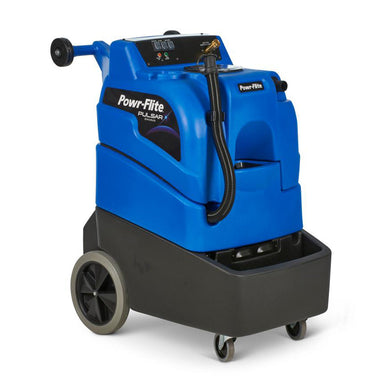
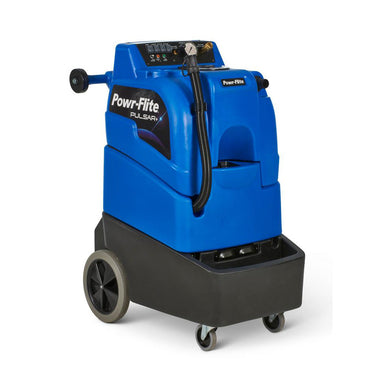
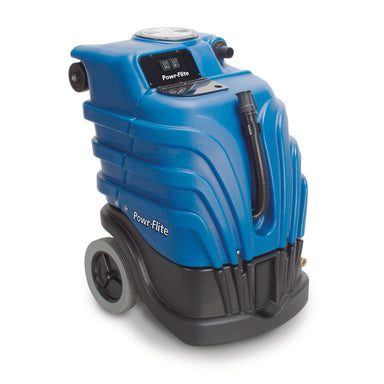
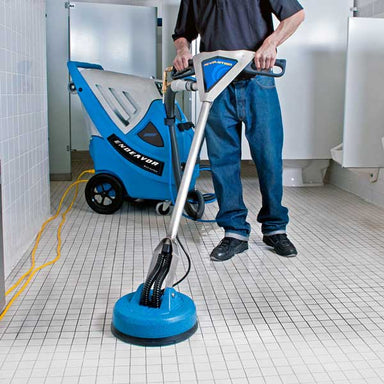
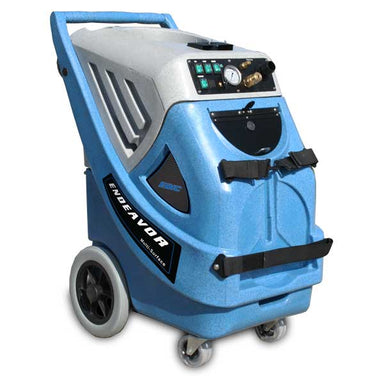
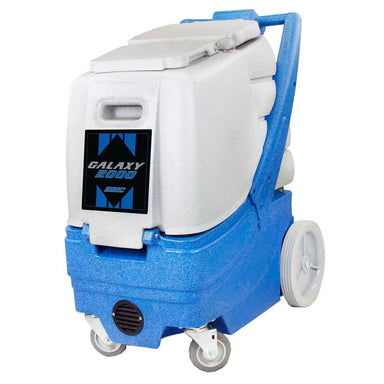
Built in or heat-ready. The Clarke EX20 100SC and 100H, the Powr-Flite Pulsar Gamma and Delta and the PFX1080CW come as a carpet extractor with heater inside the box, ready to plug in. The EDIC Galaxy 2000 and Galaxy Pro 2700 are heat-ready: you buy the base unit cold and add the Heat N Run external heater on day one or a year later. The EDIC Endeavor comes either way, and its heated models cover carpet, tile and grout from one box. If your budget is tight today, heat-ready keeps the door open.
Wattage and temperature. Heater output runs from 1,100 W on the EX20 100SC and 1,200 W on the PFX1080CW, to 1,750 W on the EX20 100H and 2,000 W on the EDIC Heat N Run and the Endeavor. Clarke rates the EX20 heaters for solution up to 212°F at the wand, and EDIC rates the Heat N Run for 200°F cleaning. All of them are in-line heaters, so the tank and the motors stay cool.
Count your circuits before you count watts. A 2,000 W heater on top of vacuum motors and a pump is more than one outlet delivers, which is why the Clarke EX20 100H runs two cords into outlets on separate circuits, and why the EDIC Galaxy CX models call for a 20 amp circuit before you plug in the heater. The EX20 100SC and the PFX1080CW stay on one cord by using a smaller heater, which matters in an older school wing short on outlets.
Pressure and tank. Heat does not change the pressure question. You get 100 PSI on the EX20 and PFX1080CW, 220 on the Pulsar Gamma and the Galaxy IX models, adjustable 500 on the Pulsar Delta and the Galaxy CX models, and up to 1,100 on the Endeavor for tile. Solution tanks run 10 to 17 gallons. Our portable carpet extractors page goes deeper on pressure, water lift and weight.
Not sure whether your accounts justify the heater? Tell us your square footage, carpet type, the soil you fight and how often you clean, and we will suggest a machine, backed by our 30-day return policy and free shipping on orders over $400. Reach us through our contact page or at (855) 601-5678.
| Model | Heater | How heat arrives | Cords | PSI | Solution tank | Heated from |
|---|
| Powr-Flite PFX1080CW | 1,200 W | Built in | One | 100 | 10 gal | From $2,815 |
| EDIC Galaxy 2000 + external heater | 2,000 W | External heater, base sold cold | One for the base (CX needs 20 amps), heater powered separately | 100, 220 or adjustable 500 | 12 gal | From $2,891 |
| Powr-Flite Pulsar Gamma and Delta | Built in | Built in | See product page | 220 or 50 to 500 | 10 or 15 gal | From $2,999 |
| EDIC Galaxy Pro 2700 + external heater | 2,000 W | External heater, base sold cold | One for the base (CX needs 20 amps), heater powered separately | 220 or adjustable 500 | 17 gal | From $3,549 |
| Clarke EX20 100SC and 100H | 1,100 W or 1,750 W | Built in, up to 212°F | One (100SC) or two (100H) | 100 | 12.5 gal | From $3,612 |
| EDIC Endeavor heated | 2,000 W | Built in, carpet and tile | Two | Adjustable 75 to 1,100 | 13 gal | From $8,087 |
Table prices are for the heated configuration. If you clean vehicle interiors, the PFX1080CW and our auto detailing extractors are the better fit.
What a Carpet Extractor Heater Does, and Does Not Do
An in-line carpet extractor heater raises the temperature of the solution between the pump and the wand. It does not warm the tank, and it holds its rated temperature best at moderate flow rather than with the trigger wide open. It does not replace chemistry either: you still pre-spray, let it dwell and agitate, then rinse hot. If most of your carpet is pre-sprayed traffic lanes in offices, a cold unit from our portable carpet extractors collection may be all you need, and our carpet extractors hub covers the format choice.
Frequently Asked Questions About Heated Carpet Extractors
Is a heated carpet extractor worth it?
Usually, for greasy or heavily soiled carpet, and less so for routine maintenance on pre-sprayed traffic lanes. Hot solution loosens grease, gum and oily film faster, which matters most in restaurants, older buildings without hot water at the tap and restoration jobs. If you mostly do interim cleaning on offices, a cold unit with a good pre-spray gets you most of the way for less money and fewer circuits.
Does a heated carpet extractor need its own circuit?
Often, yes. A heater draws 1,100 to 2,000 watts on top of the vacuum motors and pump, which is why the Clarke EX20 100H needs two outlets on separate circuits. Single-cord machines such as the EX20 100SC and the PFX1080CW use a smaller heater to stay on one circuit. Count the outlets on separate breakers in the rooms you clean before you buy.
Can I fill a non-heated extractor with hot tap water instead?
You can, and plenty of cleaners do, but it only holds up where the building's tap water runs hot and the job is short. Tank water cools as you work, while an in-line heater keeps the solution hot at the wand for the whole tank. If your accounts have reliable hot water and light soil, filling hot is a fair compromise. If they do not, buy the heater or a heat-ready machine.
Does the heater heat the whole tank?
No. Every heated machine here uses an in-line heater that warms the solution after the pump, on its way to the wand, so the tank and the motors stay cool. The temperature you get at the wand depends on flow: the Clarke EX20 rates up to 212°F and the EDIC external heater is built for 200°F cleaning, at a moderate trigger rather than wide open.
Do I still need to pre-spray and agitate if the extractor is heated?
Yes. Heat speeds up the chemistry, it does not replace it. Pre-spray gives your detergent dwell time to break the soil bond, agitation with a brush or a CRB machine works it into the pile, and the hot water extractor rinses it out. Relying on hot water alone leaves more soil behind and takes more passes, which means wetter carpet and longer dry times.